


Small and Medium Enterprises (SMEs) form the backbone of Malaysia’s economy, contributing significantly to employment, innovation, and GDP growth. As Malaysian SMEs increasingly adopt digital technologies—such as cloud computing, e-commerce platforms, digital payments, and remote working tools—their exposure to cyber threats has grown substantially. Cybersecurity is no longer a concern limited to large corporations; it is now a critical business risk for SMEs that must be addressed through regulatory compliance, technical controls, and organizational awareness.
The Rising Cyber Threat Landscape for SMEs
Malaysian SMEs are attractive targets for cybercriminals because they often operate with limited IT budgets, minimal in-house expertise, and weaker security controls. Common cyber threats include phishing attacks, ransomware, business email compromise (BEC), malware infections, and data breaches. These incidents can lead to financial losses, operational downtime, reputational damage, and potential legal consequences. For SMEs, even a single cyber incident can threaten business continuity.
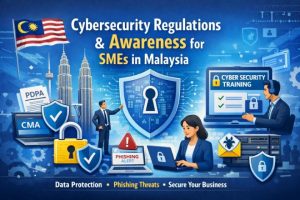
Key Cybersecurity Regulations in Malaysia
Malaysia has established several regulatory and policy frameworks to protect digital assets and personal data, which directly or indirectly impact SMEs:
-
Personal Data Protection Act (PDPA) 2010
The PDPA is the cornerstone of data protection in Malaysia. It governs how organizations collect, process, store, and disclose personal data. SMEs handling customer or employee data must implement reasonable security measures to prevent unauthorized access, data leaks, or misuse. Non-compliance can result in fines, penalties, and reputational harm. -
Computer Crimes Act 1997
This act addresses unauthorized access, modification, or misuse of computer systems. While primarily aimed at prosecuting offenders, it underscores the responsibility of businesses to safeguard their systems and report cyber incidents. -
Communications and Multimedia Act 1998 (CMA)
SMEs operating online platforms, digital services, or communication systems fall under the scope of the CMA, which emphasizes secure and responsible use of network and digital services. -
National Cyber Security Policy (NCSP)
Malaysia’s NCSP provides strategic direction for building national cyber resilience. While not a compliance law, it encourages organizations—including SMEs—to adopt cybersecurity best practices and align with national security objectives.
The Role of Cybersecurity Awareness
Regulations alone are insufficient without strong cybersecurity awareness. Human error remains one of the leading causes of cyber incidents. Employees falling victim to phishing emails, weak password practices, or unsafe use of devices can expose SMEs to serious risks. Therefore, building a cybersecurity-aware culture is essential.
Awareness initiatives should focus on:
-
Recognizing phishing and social engineering attacks
-
Safe password and authentication practices
-
Secure handling of customer and financial data
-
Responsible use of personal and work devices
-
Incident reporting procedures
Regular training sessions, simulated phishing exercises, and clear internal policies can significantly reduce the likelihood of successful cyberattacks.
Practical Steps for SMEs
To align with regulations and improve cyber resilience, Malaysian SMEs should adopt a risk-based approach:
-
Conduct basic risk assessments to identify critical data and systems
-
Implement fundamental controls such as firewalls, antivirus software, encryption, and regular patching
-
Use strong access controls, including multi-factor authentication (MFA)
-
Maintain secure backups to mitigate ransomware risks
-
Develop an incident response plan to handle breaches effectively
Government agencies and organizations such as CyberSecurity Malaysia offer guidelines, training programs, and advisory services specifically designed for SMEs, making cybersecurity more accessible and affordable.
Conclusion
For Malaysian SMEs, cybersecurity is no longer optional—it is a regulatory, operational, and strategic necessity. Compliance with laws such as the PDPA, combined with strong cybersecurity awareness and basic technical controls, can significantly reduce cyber risks. By viewing cybersecurity as an enabler of trust rather than a cost, SMEs can protect their digital assets, build customer confidence, and ensure sustainable growth in Malaysia’s rapidly evolving digital economy.